
Text vs Email vs Voice vs Instant Estimate, Which First Response Actually Converts
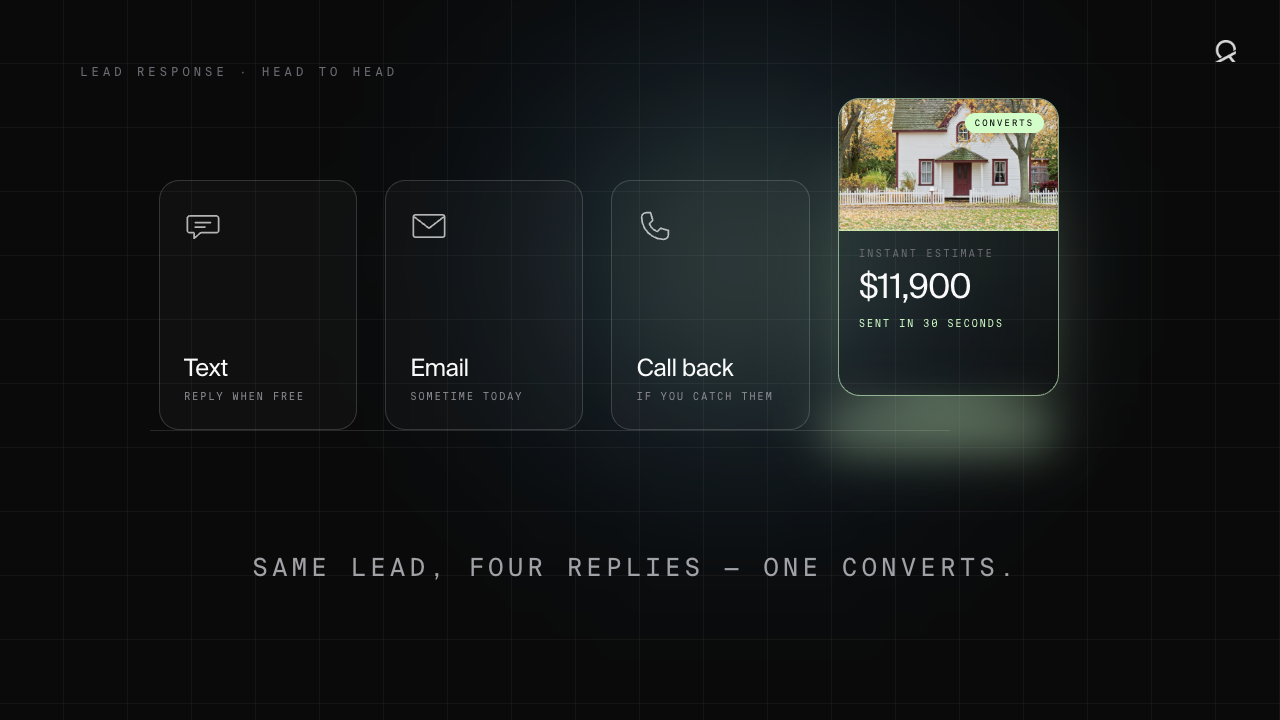
For contractors and home-service businesses, most advice on responding to leads argues about how fast. Almost none of it talks about how, meaning which channel you answer on. And the channel matters more than people think, because a fast response on the wrong one still loses. This piece compares text, email, voice, and the instant visual estimate, so you can pick the best way to respond to your leads instead of defaulting to a phone call out of habit.
The short answer
The best first response is usually on the channel the customer used, delivered faster than they expected. If they texted, text back. If they filled a form, a fast email or text beats a surprise phone call. That is the simple rule, and then it gets more interesting, because urgency and deal value should push you toward different channels. An emergency callout and a big kitchen remodel do not want the same first touch. Match the channel to the job, not to your preference.
Voice
A phone call is the highest-intent signal there is, and for urgent, high-trust situations it is hard to beat. The problem is coverage and answer rates. You cannot always pick up, and most people now will not answer a number they do not recognize. Pew Research has found that around 80 percent of Americans do not answer cellphone calls from unknown numbers, and it is worth noting that Pew is a neutral research body, not a company selling you call-handling software. So voice is powerful when it connects and worthless when it goes to voicemail, which, as covered in why most inquiries never get answered, is most of the time. Best used when the matter is urgent and the relationship or deal value justifies a real call.
Text and WhatsApp
Text is the fastest channel to an actual reply and has by far the highest read rate, most texts get read within minutes of arriving. It is low friction for the customer, easy to answer between other things, and it keeps a written thread. The read-rate figures you see quoted for SMS are almost all published by SMS marketing platforms, so treat the exact percentages with caution, but the direction is not in dispute. Where text falls down is complexity, you cannot walk someone through a detailed quote or a nuanced decision over SMS without it becoming painful. Best used for fast acknowledgement, simple qualification, and booking, especially when the customer texted first.
Email works for the bigger, considered jobs a homeowner reads through, compares, and talks over with a partner before deciding, think a full remodel or a large exterior project. It carries detail, photos, and a paper trail. It is close to useless for emergencies, nobody with water coming through the ceiling is refreshing their inbox. Best used for high-value, high-consideration work, and anything the customer needs to show someone else before saying yes.
Instant estimate or visual response
The highest-converting first response, where it applies, is not a message at all, it is showing the customer their outcome. A price band with a visual of their finished job does more persuading than any amount of copy, which is the whole argument behind showing the finished job instead of quoting a price. The cost is that it only fits businesses with a visual outcome and it is the most expensive to build well. Best used for roofing, painting, landscaping, remodels, anything with a real before and after.
The channels side by side
| Voice | Text / WhatsApp | Instant estimate | ||
|---|---|---|---|---|
| Speed to first reply | Slow if missed | Fastest | Medium | Fast, once built |
| Read rate | Low if voicemail | Highest | Medium | High |
| What it can accomplish | Deep, if answered | Quick qualify and book | Detail and comparison | Persuade with the outcome |
| Build cost | Low | Low to medium | Low | High |
| Where it fails | Unanswered numbers | Complex quotes | Emergencies | No visual outcome |
The matching rule
Do not pick a channel by what you like, pick it by the urgency and the value of the job. A burst pipe at 9pm and a $40,000 kitchen remodel are opposite ends. The emergency wants an instant text or call and a fast booking. The remodel wants a considered reply, photos of the finished result, and a scheduled visit. High urgency pushes you toward text and voice. High value and consideration push you toward email and a visual estimate. Most contractors default everything to one channel and lose the jobs that wanted a different one.
The part everyone skips, the escalation path
Whatever channel you automate the first response on, it needs a clean handoff to a human and a clear rule for when. This is the step people forget, and it is the one that turns a helpful system into a frustrating one. Without a defined escalation, an automated responder that hits the edge of what it can handle just keeps talking, and now you have built a wall instead of a door. Decide in advance what triggers a human, an unusual request, a high-value opportunity, a frustrated tone, a question it cannot answer, and make the handoff instant and obvious to the customer. A first response is only as good as its exit to a person.
That escalation rule is one small piece of a bigger discipline. We call it GTM Engineering, building a real system around a workflow instead of just pointing a tool at it. Matching the channel above is the same idea applied to your first response.
The honest truth
Multi-channel is oversold. You do not need to be instant and excellent on every channel at once, and trying usually means being mediocre on all of them. One channel covered fast and well beats four covered badly. Pick the one your customers actually use most, cover it properly, including after hours, then add the next. Coverage and quality on one channel beats a thin presence everywhere.
Key takeaways
The best first response is usually on the channel the customer used, faster than they expected.
Match the channel to urgency and deal value, not to your own preference.
Text is fastest and most-read, voice is deepest but often unanswered (around 80 percent of Americans ignore unknown numbers), email suits considered, higher-value jobs, and instant visual estimates convert best where there is a visual outcome.
Every automated first response needs a clean, rule-based handoff to a human, or it becomes a wall.
Multi-channel is oversold. Cover one channel fast and well before adding another.
FAQ
What is the best way to respond to a new lead?
Respond on the channel they used, faster than they expect, and match the depth to the situation. Text for speed and simple booking, a call for urgent high-trust matters, email for considered purchases, and a visual estimate where the outcome can be shown.
Should I call or text a new lead?
Text usually gets read and answered faster, especially if they texted or messaged first. Around 80 percent of Americans do not answer calls from numbers they do not recognize, so a cold call to a new lead often just becomes a voicemail. Reserve calls for urgent situations or higher-value relationships.
Do I need to respond on every channel?
No. One channel covered fast and well beats a thin presence on four. Pick the channel your customers actually use, cover it properly including after hours, then expand.
Want to know which channel is leaking leads for your business? Our free AI audit maps how you respond today and where it is costing you. No pitch, just the numbers.